 eMaskani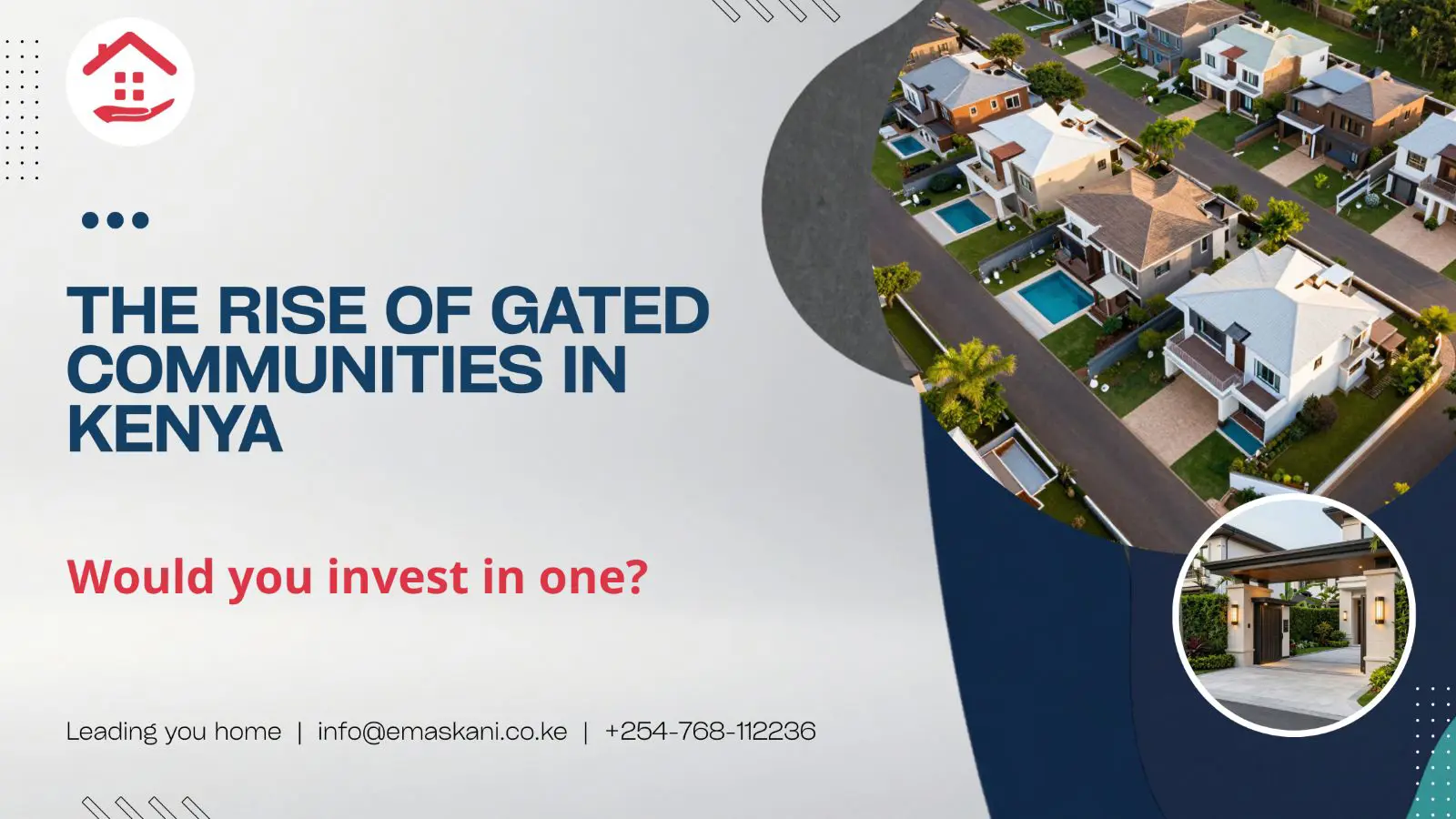
The Rise of Gated Communities in Kenya Is Transforming How We Live — Would You Invest in One?
For many Kenyans, choosing a home is no longer simply about finding a house with enough bedrooms at the right price.
Increasingly, buyers are asking a bigger question: What kind of lifestyle do I want my home to provide?
This shift has contributed to the growing popularity of gated communities across Kenya. From established neighbourhoods in Nairobi to rapidly developing areas such as Ngong, Ruiru, Kiambu, Athi River and Kitengela, planned residential communities are changing the way Kenyans think about homeownership.
Recently in Kenya urban population’s preference, security, convenience, water and power reliability, recreational facilities and gated-community living are among the features influencing homeowners' preferences.
So, what is behind the rise of gated communities — and would investing in one make sense for you?
What Exactly Is a Gated Community?
A gated community is a planned residential development where access is controlled through designated entrances, often supported by perimeter walls, security personnel, CCTV and other security measures.
But modern gated communities offer much more than a gate.
Depending on the development, residents may have access to:
- Landscaped gardens and green spaces
- Children's playgrounds
- Clubhouses and recreational facilities
- Swimming pools and gyms
- Paved internal roads
- Street lighting
- Reliable water infrastructure
- Backup power solutions
- Controlled access and security
- Shared community spaces
In larger master-planned developments, residential areas may also be integrated with schools, shopping facilities, offices and recreational spaces.
The result is a housing model that focuses not only on the building itself, but on the environment surrounding the home.
Why Are Gated Communities Becoming More Popular in Kenya?
1. Security Is a Major Priority
For many families, security is one of the strongest reasons for choosing a gated community.
Controlled entrances, perimeter fencing, security personnel and surveillance systems can create an additional layer of protection and peace of mind.
This doesn't mean a gated community eliminates security risks. Rather, the controlled environment can make security management more coordinated than it might be in an open residential neighbourhood.
2. Kenyans Are Buying Into a Lifestyle
Today's homeowner increasingly wants more than four walls and a roof.
A family might want a jogging trail nearby. Parents may want a safe play area for children. Professionals working remotely may value quiet surroundings, reliable connectivity and green spaces.
Developers are responding by designing communities around these lifestyle preferences.
The Kenya Bankers Association's housing research found that homeowners place significant value on amenities such as shopping centres, swimming pools, children's play areas, gyms, gardens, parking and power and water reliability.
3. Better-Planned Neighbourhoods
One of the biggest attractions of a well-designed gated community is planning.
Instead of each homeowner independently dealing with roads, drainage, security and common spaces, these elements can be incorporated into the overall development.
This can make everyday life more convenient and can contribute to a more organised residential environment.
The trend is also influencing areas beyond Nairobi. Demand for gated and controlled developments has been reported across Nairobi, Kiambu, Kajiado and the coastal region.
4. A Stronger Sense of Community
There is another benefit that is sometimes overlooked: community.
Living within a planned development can create opportunities for neighbours to interact, children to play together and residents to participate in community activities.
Homeowners' associations and estate management structures can also establish common standards for maintenance, security and shared facilities.
For families looking for a quieter and more connected environment, this can be a significant advantage.
Are Gated Communities a Good Investment?
This is where things become more interesting.
A gated community can be both a home and an investment, but buyers should avoid assuming that every gated property will automatically appreciate.
Location remains critical.
Connectivity to Nairobi and other employment centres, infrastructure development, access to schools and shopping facilities, quality of construction and the overall management of the estate can all influence a property's long-term attractiveness.
Developers are increasingly responding to limited supply of high-quality gated communities, with new developments emerging in areas including Runda and along Kiambu Road. The firm also expects continued demand for secure, well-serviced developments from high-net-worth individuals, expatriates and diaspora buyers.
For an investor, however, there are several questions worth asking:
Will people want to live here in five or ten years?
Is the location likely to benefit from infrastructure development?
Are the amenities genuinely useful, or simply marketing features?
Will the property be affordable to maintain?
Is there sufficient rental demand in the area?
These questions matter just as much as the beauty of the house itself.
The Hidden Cost: Service Charges and Estate Management
Gated living comes with convenience, but convenience isn't free.
Depending on the development, homeowners may contribute towards:
- Security
- Landscaping
- Cleaning and maintenance of common areas
- Waste management
- Swimming pools and gyms
- Roads and street lighting
- Estate management
- Repairs to shared infrastructure
Before buying, ask for a clear breakdown of service charges and find out how they have changed historically.
Also understand what the charges cover and whether there are additional fees for facilities.
A beautiful house with an unsustainable maintenance bill may not be the bargain it initially appears to be.
What Should You Check Before Buying?
If you're considering purchasing a home in a gated community, don't be persuaded by the clubhouse and swimming pool alone.
Look at the bigger picture.
Check the location
Consider your daily commute, schools, hospitals, shopping and access to major roads.
Learn more about the property developer
Look at their previous projects and, where possible, speak to existing homeowners.
Understand the management structure
Find out who manages the estate, how decisions are made and what homeowners are responsible for.
Examine the service charges
Understand exactly what you will be paying every month or year.
Verify the property's legal documentation
Carry out proper title, ownership, planning and transaction due diligence before committing your money. Hire the right lawyer, preferably a bank certified lawyer if possible.
Think about resale and rental demand
Even if you intend to live there permanently, circumstances can change. A property with strong demand is generally easier to sell or rent if your plans change.
So, Would You Invest in a Gated Community?
For some Kenyans, the answer will be yes.
For others, a standalone home, apartment or serviced plot may make more financial and lifestyle sense.
The important thing is to avoid buying simply because a development is fashionable.
Instead, ask whether the community fits your lifestyle, your finances and your long-term goals.
A young family may prioritise schools, children's facilities and security.
A professional may prioritise connectivity, commuting time and recreational facilities.
An investor may focus more heavily on rental demand, capital appreciation and operating costs.
A diaspora buyer may place greater emphasis on security, professional estate management and reliable infrastructure.
There is no single "best" gated community.
There is only the community that is right for you.
Ready to Find Your Ideal Gated Community?
Finding the right home can be just as challenging as financing it.
At eMaskani, we can help make that journey easier.
Whether you're buying your first home, upgrading your family's lifestyle or looking for an investment property, contact us to explore mortgage finance facilitation and property sourcing services.
We can help connect you with suitable mortgage financing options and assist in sourcing a home in a gated community that matches your lifestyle, preferred location, budget and homeownership goals.
Your next home could be more than a house.
It could be the lifestyle you've been looking for.
Talk to us today and let us help you find the right home for you.